


 Scan and Follow Us


Deepening Green Belt and Road Cooperation and Building a China–Indonesia Ecological Industry Bridge — China–Indonesia Enterprise Exchange & EIP Project Matchmaking Session Successfully Held in Beijing
To further advance the Green Belt and Road Initiative and deepen practical cooperation between China and Indonesia in the environmental sector, the China–Indonesia Enterprise Exchange and EIP Project Matchmaking Session—hosted by the Belt and Road Eco-industry Cooperation Working Committee of the All-China Environment Federation (hereinafter referred to as the “Working Committee”)—was successfully held in Beijing on 11 February. The meeting focused on the industrial upgrading and project development needs of Ecowaste Indonesia Prima (EIP), a key Indonesian environmental services company. A number of leading Chinese environmental enterprises were invited for targeted business matchmaking, with the goal of fostering complementary strengths, win–win cooperation, and injecting fresh momentum into regional green transformation.
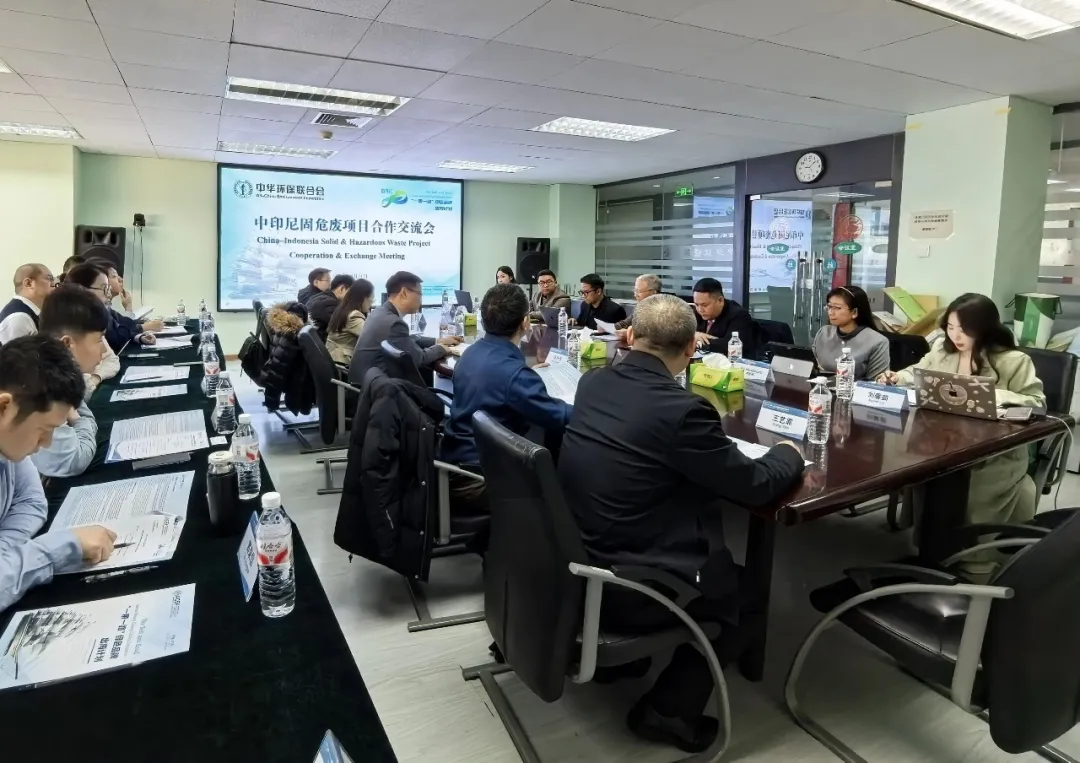
The session was chaired by Mr. Shi Xiang, Deputy Director and Secretary-General of the Working Committee. Distinguished attendees included Mr. Tu Ruihe, Vice Chairman of the All-China Environment Federation and Director of the Working Committee; Mr. Arief Rathomy, Representative of the Directorate of East Asia Affairs, Ministry of Foreign Affairs of the Republic of Indonesia; Ms. Ari Handayani, Counsellor of the Embassy of the Republic of Indonesia in China; Mr. Teguh Permana Sidik, Executive Director of PT Ecowaste Indonesia Prima (EIP); Mr. Aditya M. Nugraha, Director of PT Ecowaste Indonesia Prima (EIP); and Ms. Zhang Yajing, Director of the Technology and Industry Promotion Office of the Environmental Development Center under China's Ministry of Ecology and Environment. Nearly 20 representatives from leading Chinese enterprises—including Shinva Medical Instrument Co., Ltd., Zhejiang Zhongrun Ecological Environment Treatment Co., Ltd., Shanghai Yaoxin Environmental Technology Co., Ltd., Tongfang Environment Co., Ltd., Zhonggong Environmental Technology Co., Ltd., and Zhongke Jiahe Ruidi Environmental Technology Development Co., Ltd., Beijing Nexcin Technology Co., Ltd.—participated in the meeting, covering key areas such as solid and hazardous waste treatment and environmental engineering.
Aligning Needs to Build a Targeted Cooperation Platform
In his opening remarks, Mr. Tu Ruihe noted that green development is an intrinsic requirement of the Belt and Road Initiative, and environmental cooperation represents a key pillar of China–Indonesia strategic alignment. The Working Committee has long been committed to integrating China’s advanced environmental technologies, equipment, and solutions through its “Green Brands Going Global” initiative, supporting industrial upgrading in partner countries. He emphasized that this meeting served as a precision matchmaking platform responding to EIP’s urgent needs in medical and industrial waste treatment, enabling direct dialogue between enterprises to identify opportunities, catalyze partnerships, and accelerate project implementation.
EIP’s management team provided a comprehensive overview of the company’s development and strategic priorities. As a leading hazardous waste collection and transportation provider in Indonesia, EIP is entering a critical phase of expansion into higher value-added segments of the industry chain. The company plans to build a modern waste treatment facility to overcome capacity constraints and transition from “transportation” to “resource recovery.” EIP expressed a strong interest in comprehensive cooperation with Chinese partners across technology, equipment, investment, and operations.
Complementary Strengths: Chinese Expertise Highly Recognized
During the matchmaking session, several prominent Chinese environmental companies presented their technological capabilities and integrated service solutions:
Shandong Shinva Medical Instrument Co., Ltd. showcased advanced solutions for the safe and intelligent treatment of medical waste, highlighting compact and high-efficiency equipment well suited to Indonesia’s healthcare sector.
Zhejiang Zhongrun Ecological Environment Treatment Co., Ltd. introduced its proprietary High-Temperature Anaerobic Decomposition Technology for Medical Waste, featuring thorough sterilization, high volume reduction, and near-zero dioxin emissions. Tailored, cost-effective solutions were proposed to address Indonesia’s archipelagic geography.
Shanghai Yaoxin Environmental Technology Co., Ltd. presented modular, small-scale waste pyrolysis and gasification incineration technology with strong environmental adaptability and emission control performance.
Tongfang Environment Co., Ltd. highlighted its extensive experience in solid waste treatment and environmental engineering, including mature hazardous waste projects such as in Macao.
China Zhonggong Environmental Technology Co., Ltd. shared experience in kitchen waste treatment projects (e.g., in Sichuan) and expressed strong interest in cooperation on EIP’s waste treatment and copper-containing sludge resource recovery projects, offering collaboration in technology, financing, and international market development. The advanced technologies, proven cases and practical solutions of Chinese enterprises have received active attention and high recognition from the Indonesian side.
Policy Support: Indonesia Signals Strong Commitment to Cooperation
Mr. Arief Rathomy outlined Indonesia’s national priorities and vast market potential in waste management and energy transition. He emphasized that Indonesia faces significant waste management challenges and has made waste-to-energy a national priority. Chinese companies, he noted, have demonstrated strong competitiveness and technological adaptability in Indonesian tenders. He affirmed that Indonesia’s Ministry of Foreign Affairs will actively leverage economic diplomacy to facilitate government–business dialogue, support cooperation models such as EPC and BOT, and create favorable conditions for international investors—including Chinese enterprises—to contribute to Indonesia’s green and sustainable development goals.
From Consensus to Action: A Clear Roadmap for Implementation
The meeting concluded on a pragmatic and productive note. Ms. Rachel, Head of Southeast Asia Affairs at the Working Committee’s International Department, stated that the session achieved highly targeted matching between project needs and industrial resources and resulted in multiple preliminary cooperation agreements. The Working Committee will establish a regular communication mechanism to support further discussions on technical solutions, business models, and cooperation details, accelerating the implementation of landmark projects such as the EIP waste treatment facility.
To advance these outcomes, the Working Committee plans to organize a seven-day environmental and renewable energy project delegation to Indonesia from 19–25 April 2026. As a key component of the “Green Brands Going Global” initiative, the visit will include policy dialogues, field research, and project negotiations to help Chinese enterprises better understand the Indonesian market and expand cooperation opportunities.
The itinerary will cover Jakarta and the Batang Special Economic Zone, including visits to the Indonesia Investment Coordinating Board (BKPM), the Ministry of Environment and Forestry (KLHK), the Ministry of Energy and Mineral Resources (ESDM), the Ministry of Foreign Affairs, and the Ministry of Public Works and Housing. Meetings will also be arranged with the Indonesian Industrial Estate Association, the National Special Economic Zone Council, key industrial parks, and representative enterprises in environmental and water services. The program will focus on solid and hazardous waste management, water treatment, renewable energy, and green industrial park development, including site visits to EIP project locations.
The successful convening of this meeting represents another concrete step in advancing Belt and Road ecological industry cooperation. It not only creates valuable business opportunities for enterprises from both countries, but also further strengthens the China–Indonesia partnership in green development and ecological civilization. Both sides reaffirmed their commitment to the principles of consultation, joint contribution, and shared benefits, and to building environmental industry cooperation into a flagship of high-quality Belt and Road collaboration.