


 Scan and Follow Us


Middle East and Arab Countries Session – China Green Industries Going Global Cooperation Forum Held in Beijing:Jointly Exploring Sustainable Transformation and Deepening Regional Cooperation through P
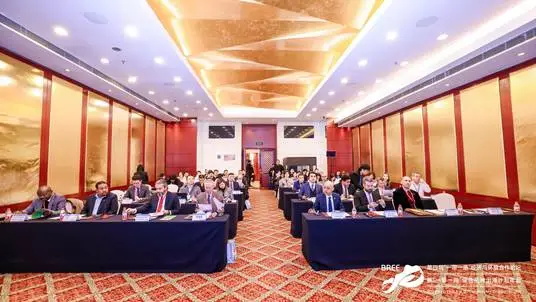
Recently, as an important parallel forum of the 4th Belt and Road Economic and Environmental Cooperation Forum and the Annual Conference of the Belt and Road Green Brands Going Global Initiative, the Middle East and Arab Countries Session – China Green Industries Going Global Cooperation Forum was held in Beijing. Under the theme “Empowering Global Expansion through Technology: Building a New Framework for Green Cooperation with the Middle East and Arab Countries,” the forum facilitated in-depth exchanges on policy coordination, technological cooperation, and project implementation between China and Middle Eastern and Arab countries in the context of the global green and low-carbon transition.
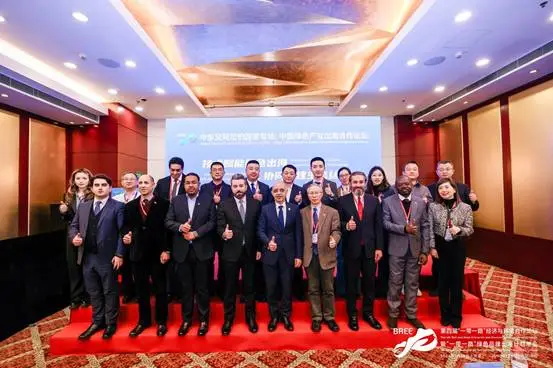
Integrating Policy Dialogue with Technological Practice, Charting a New Vision for China–Arab Green Cooperation
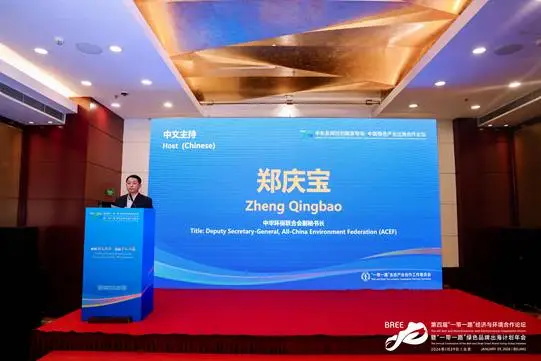
The forum was conducted in two sessions. The first session was moderated by Zheng Qingbao, Deputy Secretary-General of the All-China Environment Federation (ACEF). Centered on the green transition of Middle Eastern and Arab countries, he systematically outlined the key discussion priorities of the forum, emphasizing that, as the Belt and Road Initiative continues to advance, greater attention should be given to aligning development needs, matching cooperation pathways, and strengthening coordination mechanisms. Through sustained dialogue and pragmatic engagement, policy consensus can be translated into actionable and sustainable cooperation, laying a solid foundation for deeper collaboration.
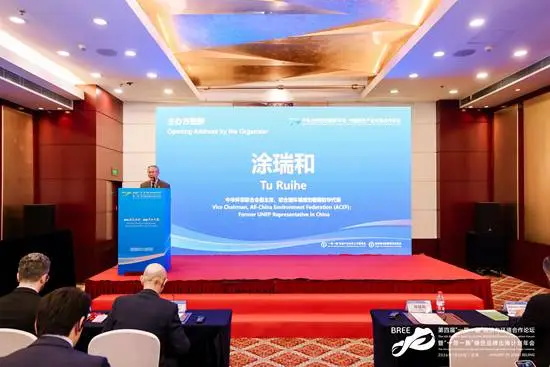
In his opening remarks, Tu Ruihe, Vice Chairman of the All-China Environment Federation and former Representative of the United Nations Environment Programme in China, noted that climate change, ecosystem degradation, and pollution are increasingly interlinked, elevating the green and low-carbon transition from an environmental issue to a systemic challenge related to energy security, industrial structure, and economic resilience. As Middle Eastern and Arab countries accelerate energy restructuring and economic diversification, China has developed comprehensive solutions in pollution control, clean energy, resource recycling, and ecological restoration. In the new phase of high-quality Belt and Road cooperation, both sides should focus on clean energy, environmental infrastructure, diversified financing, and local capacity building to advance a number of demonstrative cooperation projects.
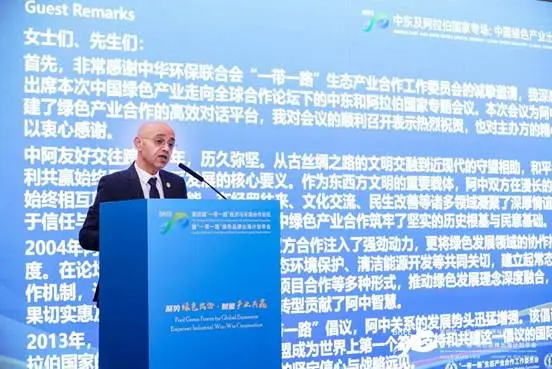
H.E. Ahmed Mostafa Fahmy Hafez, Ambassador of the League of Arab States to China, reviewed the long-standing friendship and evolution of green cooperation between China and Arab countries. He highlighted that the League of Arab States was among the earliest international organizations to support and participate in the Belt and Road Initiative. Over the past decade, China and Arab countries have deepened cooperation in clean energy, environmental protection, and sustainable development under the framework of the “Green Silk Road.” Looking ahead, the Arab side looks forward to further strengthening policy alignment and industrial collaboration with China, advancing green cooperation toward higher-quality development.
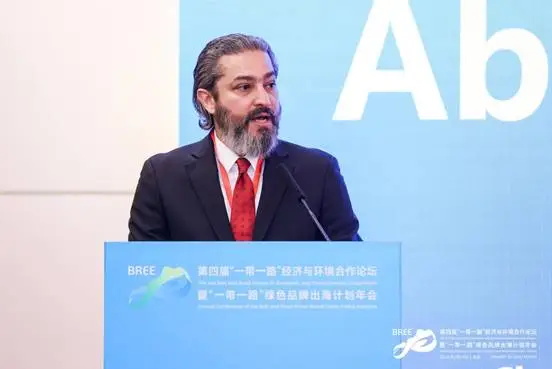
H.E. Abdulaziz Al-Dakhil, Chargé d’Affaires ad interim of the Embassy of Kuwait in China, stated that green growth has become a core component of Kuwait’s national development strategy. As one of the earliest countries to engage with China under the Belt and Road framework, Kuwait places high importance on cooperation with China in renewable energy, environmental technologies, green infrastructure, and sustainable urban development, and welcomes active participation by Chinese enterprises and investment in Kuwait’s green transition.
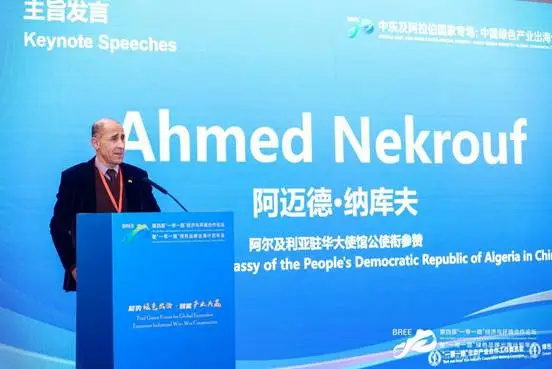
During the keynote session, Ahmed Nakouf, Minister-Counsellor of the Embassy of Algeria in China, provided a comprehensive overview of Algeria’s economic diversification and green transition strategies. He noted that Algeria has integrated sustainable development goals into its national development agenda, with clear cooperation needs in renewable energy, power grid modernization, hydrogen energy, waste management, and smart cities. Through continuous improvements to its investment environment and policy framework, Algeria welcomes Chinese enterprises to participate in green projects through diverse cooperation models.
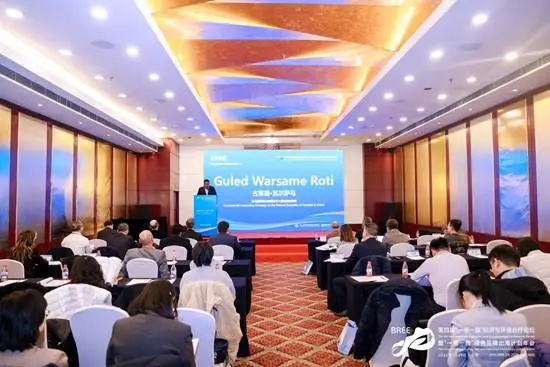
Guleid Warsame, commercial counselor of the Embassy of Somalia in China, highlighted Somalia’s significant potential in renewable energy, particularly solar and wind resources. Green development is becoming a key pillar of national reconstruction and economic recovery. Somalia looks forward to pragmatic cooperation with Chinese enterprises in clean energy, green cities, environmental governance, water resources management, and technology transfer, using green projects to improve livelihoods, create employment, and promote sustainable development.
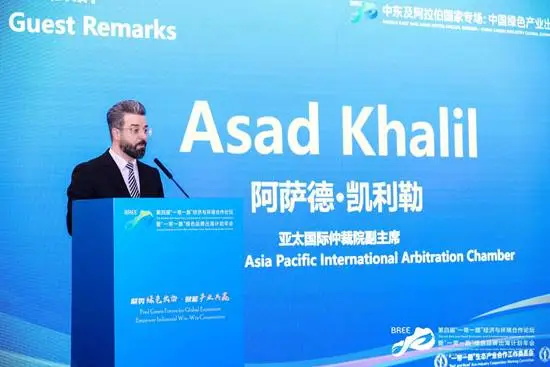
From an institutional and governance perspective, Asad Khalil, Vice President of the Asia Pacific International Arbitration Chamber, emphasized the strong complementarity between China and Middle Eastern and Arab countries in green development. Green cooperation, he noted, goes beyond technology and projects, requiring robust legal, financial, and dispute-resolution mechanisms. Transparent, predictable, and well-structured cooperation frameworks can enhance mutual trust, reduce investment risks, and ensure the steady advancement of green infrastructure and industrial cooperation.
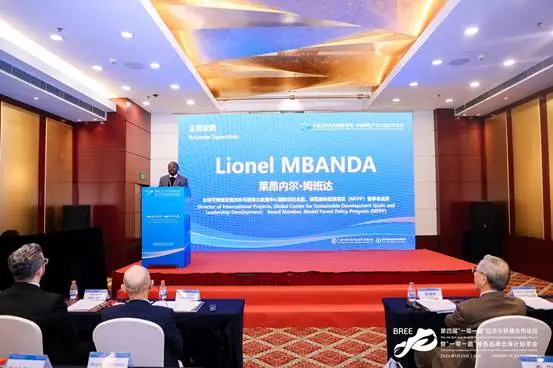
Drawing on international practice, Lionel Mbanda, International Programme Director of the Global Center for Sustainable Development Goals and Leadership and Board Member of the Model Forest Policy Project, stated that the Belt and Road Initiative provides a vital platform for the diffusion of green technologies, industrial-chain collaboration, and green finance. Strengthening technology transfer, green financial support, and multi-stakeholder cooperation mechanisms will enable China and Middle Eastern and Arab countries to achieve higher-level cooperation in renewable energy, green manufacturing, and sustainable infrastructure.
Case Studies: Demonstrating Practical Pathways for Chinese Green Technologies “Going Global”
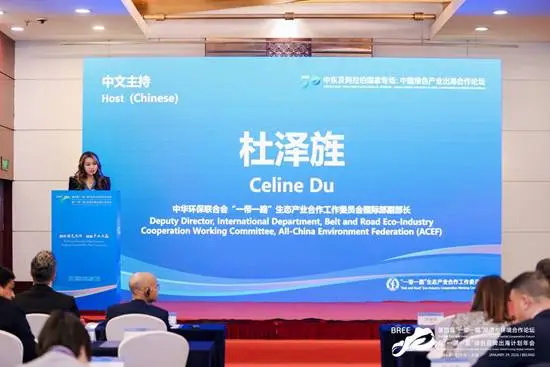
The second session of the forum was moderated by Celine Du, Deputy Director of the International Department of the Belt and Road Eco-Industry Cooperation Working Committee of the All-China Environment Federation. This session focused on practical case studies of Chinese green technologies and solutions, promoting the transition from consensus-building to concrete implementation. Representatives from leading Chinese green enterprises showcased mature technological pathways and engineering capabilities tailored to the needs of Middle Eastern and Arab countries.
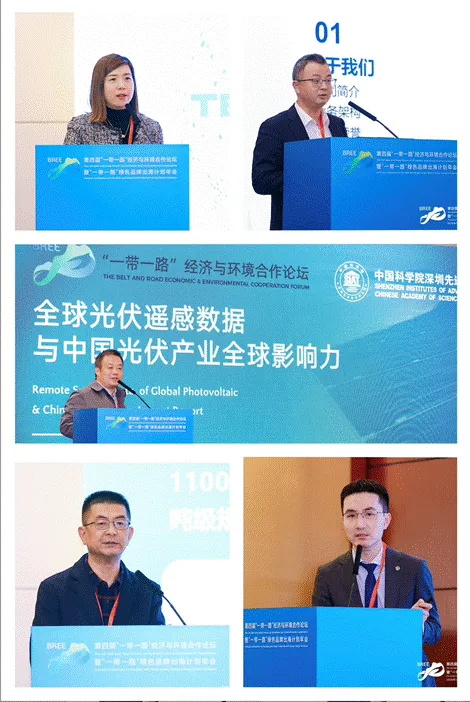
Li Mi, General Manager of Overseas Brand TERRECO under Huxu Technology Co., Ltd, introduced the company’s experience in exploring Middle Eastern and Arab markets through decentralized wastewater treatment and solid waste management solutions. She emphasized a localization-oriented approach—localized market entry, partnerships, and operations—ensuring that green solutions are effectively adapted and implemented on the ground.
Professor Sun Liqun from the Shenzhen Institutes of Advanced Technology, Chinese Academy of Sciences, released the Global Centralized Photovoltaic Power Plant Development Report, offering a global analysis of photovoltaic industry trends and China’s leading role in the global energy transition. His presentation highlighted the positive impact of Chinese photovoltaic technologies in improving energy access and livelihoods worldwide.
Zhang Weiqun, representative of Zhongke Qingfeng Environmental Technology Research Institute, shared innovative practices in ultra-low-emission technologies for small-scale waste incineration. He presented replicable solutions for decentralized solid waste treatment, providing a Chinese model that balances environmental performance with economic feasibility for Belt and Road partner countries.
Deng Xianbai, Chief Financial Officer of CECEP Environmental Protection Co., Ltd., introduced the company’s full industrial-chain experience in coordinated treatment of municipal solid waste, kitchen waste, and organic waste under the “zero-waste city” concept. He proposed integrated investment, construction, and operation models to deeply align solid waste governance with sustainable urban development.
Liu Wenbin, Senior Partner and Chief Client Officer of Far East Holding Group, shared the company’s 41 years of international development experience, outlining its global布局 in green energy, intelligent manufacturing, and industrial collaboration. He expressed the group’s commitment to actively participating in green industrial cooperation with Middle Eastern and Arab countries, promoting the coordinated global expansion of Chinese manufacturing and green transformation.
Regional Mechanisms and Chambers of Commerce: Expanding Institutional and Collaborative Space
During the forum, representatives from Dubai Chambers and the Gulf Cooperation Council (GCC) shared insights from the perspectives of regional coordination and institutional environments. They noted that the Middle East is at a critical stage of energy restructuring and sustainable transformation, with green development forming a broad regional consensus. China’s experience in green technology systems, engineering implementation, and integrated solutions offers valuable reference for regional transformation. Strengthening regional communication, coordination, and platform connectivity will help consolidate collective momentum for broader China–Arab green cooperation.
Conclusion: Advancing Cooperation with a Long-Term Perspective
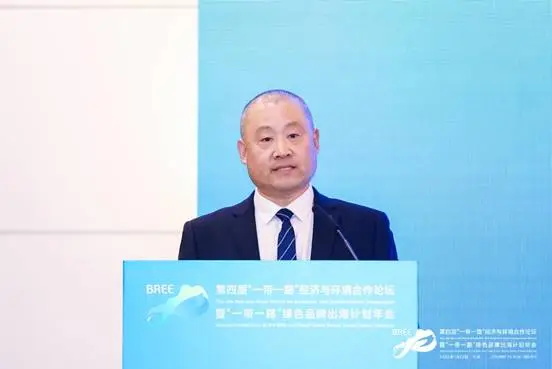
In the concluding session, Li Donghua, Deputy Secretary-General of the Belt and Road Eco-Industry Cooperation Working Committee of the All-China Environment Federation, summarized and outlined the long-term direction of cooperation between China and Middle Eastern and Arab countries. He noted that continuously building open and stable exchange platforms can connect the practical experiences accumulated by different countries and stakeholders, fostering more mature and sustainable cooperation pathways. As participation expands and collaboration mechanisms evolve, cooperation in sustainable development between China and Middle Eastern and Arab countries is expected to advance at a higher level, laying a stronger foundation for long-term regional development and global transformation.
Against the backdrop of profound adjustments in global development models, energy transition, environmental improvement, and economic resilience have become long-term challenges shared by all countries. As Middle Eastern and Arab countries explore development paths suited to their national conditions, China’s accumulated technological systems and governance experience provide a practical reference for cross-regional cooperation. Continuous engagement in key areas has enabled cooperation to move beyond conceptual dialogue toward more sustained and practice-oriented collaboration.
The Belt and Road Green Brands Going Global Initiative will continue to strengthen exchange mechanisms, promote information sharing and resource coordination, and foster closer collaboration among industry players, professional institutions, and international partners within clearer cooperation frameworks. As participation grows and cooperation networks mature, more Chinese enterprises will engage collaboratively, gaining experience and expanding global perspectives, thereby injecting stable and lasting momentum into regional sustainable development.