


 Scan and Follow Us


Silk Road Ecological Environment Monitoring and Restoration Sub-forum Held in Beijing
On January 29, 2026, the 4th Belt and Road Economic and Environmental Cooperation Forum and the Annual Meeting of the “Belt and Road Green Brand Going Global Program” opened in Beijing. The forum featured three sub-forums. Among them, the “Silk Road Ecological Environment Monitoring and Restoration Sub-forum,” jointly organized by the College of Geography and Environmental Sciences of Zhejiang University of Technology and the All-China Environment Federation, was held under the theme “Empowering Monitoring, Enhancing Restoration: Building a Silk Road Ecological Security Community.” The sub-forum attracted more than 80 participants from China, Uzbekistan, Tajikistan, Kazakhstan, and other countries.
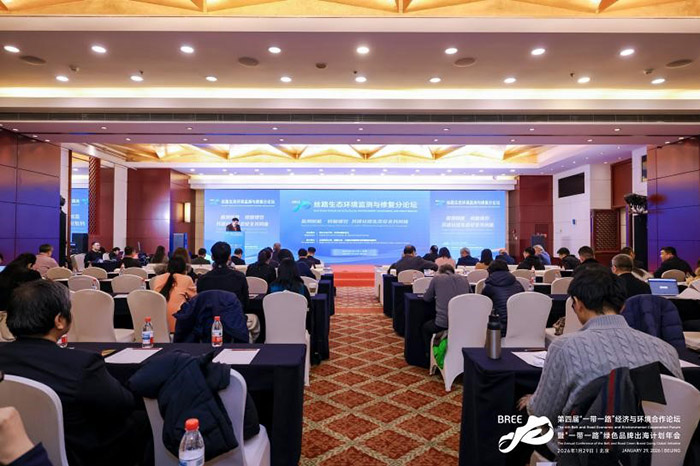
The session was chaired by Professor Liu Tie of Zhejiang University of Technology. Opening remarks were delivered by Li Yonghong,Director-General of the Foreign Environmental Cooperation Center of China’s Ministry of Ecology and Environment; Shamansur Sagdullaev, Vice President of the Academy of Sciences of Uzbekistan; and Ilhom Amonzoda, Vice President of the Academy of Sciences of Tajikistan.
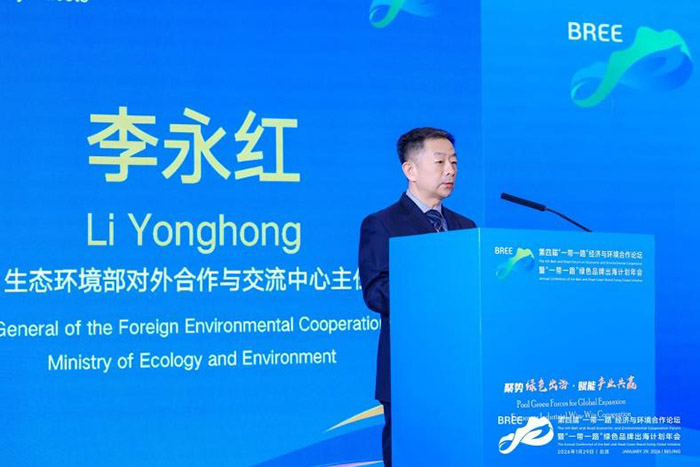
In his remarks, Li Yonghong emphasized that ecological monitoring and restoration are key pathways for advancing high-quality Belt and Road cooperation and implementing green development principles. He introduced the practical achievements China and Central Asian countries have made in policy dialogue, joint research, technology platform development, and knowledge sharing, and stated that China stands ready to continue leveraging multilateral cooperation mechanisms to jointly build a clean, resilient, and sustainable Silk Road ecological security community.
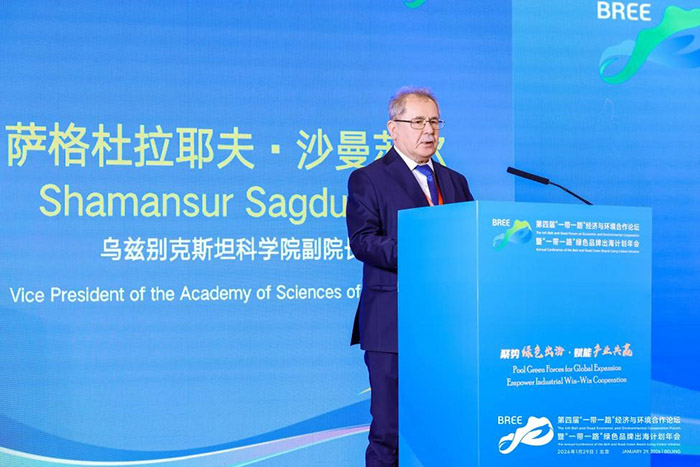
Shamansur Sagdullaev underscored the importance of strengthening cooperation on ecosystem monitoring and restoration under the Belt and Road framework. He expressed support for joint scientific research, data sharing, and transboundary ecological protection to address regional environmental challenges such as water scarcity, biodiversity loss, and dust storms, and to promote green and sustainable development across the Belt and Road region.
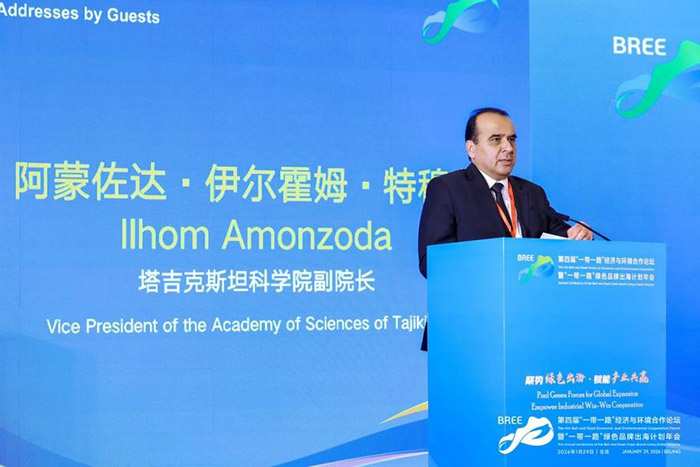
Ilhom Amonzoda stressed that, as the source of major rivers in Central Asia, Tajikistan attaches great importance to monitoring and protecting glaciers and mountain water resources. He called for stronger science and technology support to address grassland and freshwater ecosystem degradation and advocated enhanced international cooperation to establish joint research platforms. He also recognized the positive role of the “Spatiotemporal Intelligence and Sustainable Development Belt and Road Joint Laboratory” in supporting regional ecological governance through advanced technologies.
The sub-forum featured keynote presentations by Professor Chen Tieming, Executive Dean of the College of Geography and Environmental Sciences of Zhejiang University of Technology; Associate Professor Wang Xiaonan; Researcher Luo Yi from the Institute of Geographic Sciences and Natural Resources Research, Chinese Academy of Sciences; and Professor Ma Yonggang, Deputy Director of the Development Planning Office of Xinjiang University.The speakers addressed frontier technologies including spatiotemporal intelligent monitoring, mine restoration in arid regions, and trans-basin water ecological governance.
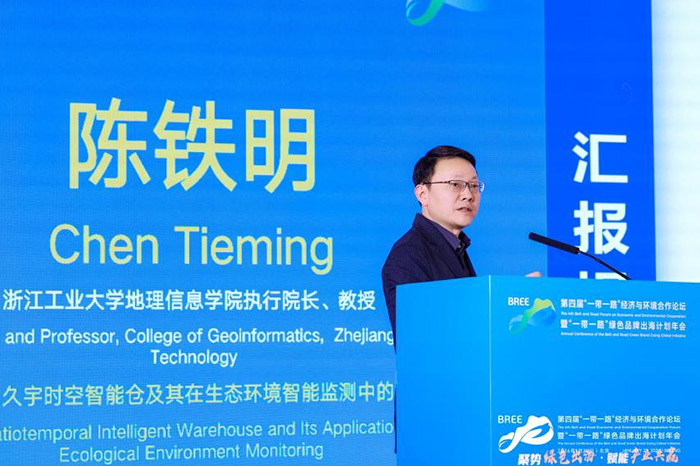
Professor Chen Tieming introduced the “Jiuyu Spatiotemporal Intelligence Cabin,” an integrated spatiotemporal big data service framework that combines remote sensing, planning, and large models for semantic perception to support intelligent ecological monitoring. The platform enables low-altitude UAV monitoring systems to achieve intelligent data collection, environmental perception, and flight route planning, thereby supporting precise ecological governance and green sustainable development along the Belt and Road.
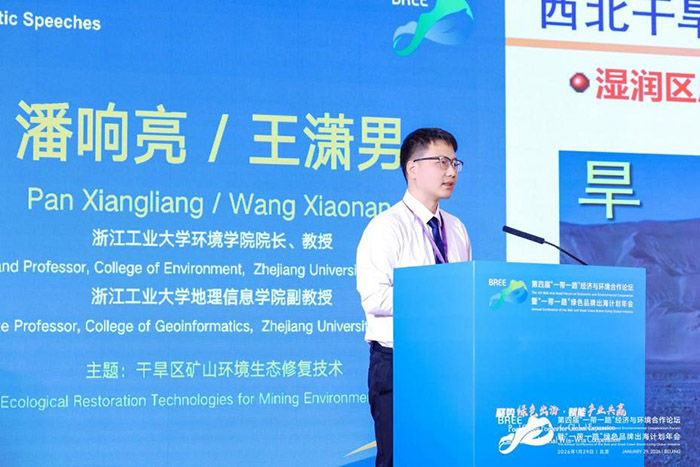
Associate Professor Wang Xiaonan presented key technologies developed by his team over nearly two decades for ecological restoration of mines in arid regions. Through microbially induced mineralization (MIM) technologies, heavy metal pollutants in tailings and soils can be stabilized and detoxified, significantly reducing environmental risks. He expressed the hope of strengthening cooperation with Central Asian partners and promoting these technologies through the Belt and Road Green Brand Going Global Program.
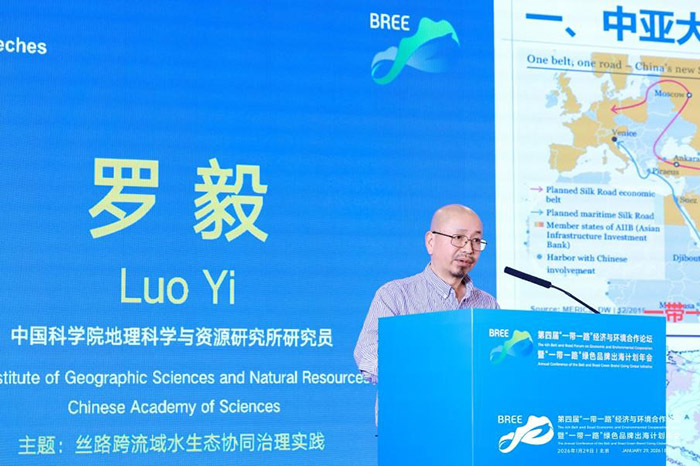
Researcher Luo Yi elaborated on research outcomes related to water–ecology coordinated governance in the Central Asian Great Lakes region and proposed a scientific governance framework for the Aral Sea Basin. He noted that climate change and insufficient intergovernmental coordination are the main causes of the desiccation of the Aral Sea. The decision-support systems and water-saving, high-yield agricultural models developed by his team have been piloted and demonstrated in Uzbekistan and other Central Asian countries were included in the outcome lists of the China–Central Asia Summit and the Belt and Road Forum, providing scientific support for transboundary water governance and ecological restoration.
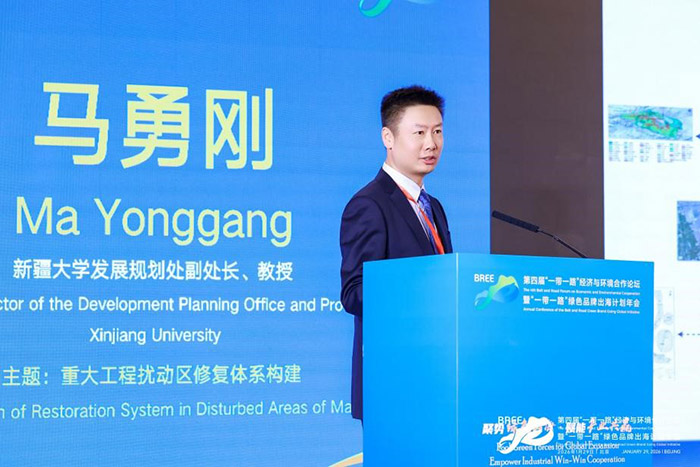
Professor Ma Yonggang introduced ecological restoration technologies and practical cases for major engineering-disturbed areas such as mines, spoil heaps, and fly ash disposal sites. He highlighted water-saving vegetation restoration techniques, utilization of local biological resources, and slope restoration equipment developed for arid and semi-arid regions in Xinjiang. These technologies have achieved up to 90% water savings and have been successfully replicated and scaled up, offering scalable solutions for ecological governance and green engineering along the Silk Road.
During the case-sharing session, the College of Geography and Environmental Sciences of Zhejiang University of Technology released a series of achievements from the Spatiotemporal Intelligence and Sustainable Development Belt and Road Joint Laboratory. The laboratory is committed to building an intelligent infrastructure and spatiotemporal foundation model system, including computing, knowledge, and model repositories. Applications include smart agriculture, disaster emergency response, and green energy, providing solutions for disaster monitoring and early warning, precision agriculture, clean energy allocation, and low-altitude UAV control in Central Asia.
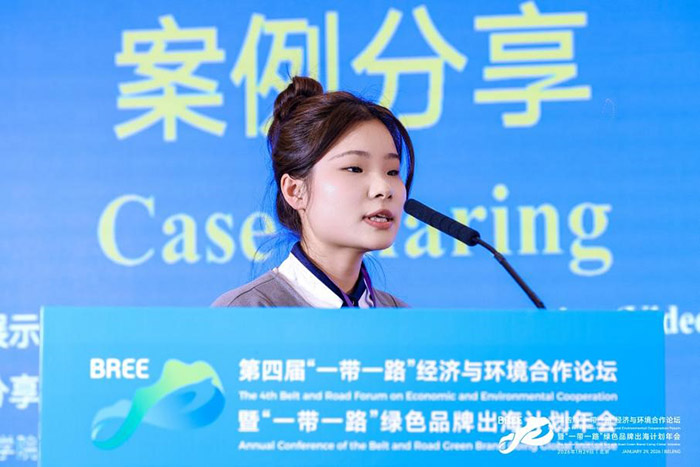
Xu Nuo from the Xi’an Institute of Optics and Precision Mechanics, Chinese Academy of Sciences, introduced the application of high-precision spectral detection and metrological technologies in water environment monitoring. The multi-modal spectral observation system enables high-precision, in-situ, reagent-free rapid monitoring of water pollution and has already been deployed in the Yangtze River Basin, coastal waters, and urban water systems, providing reliable technical support for integrated watershed monitoring along the Belt and Road.
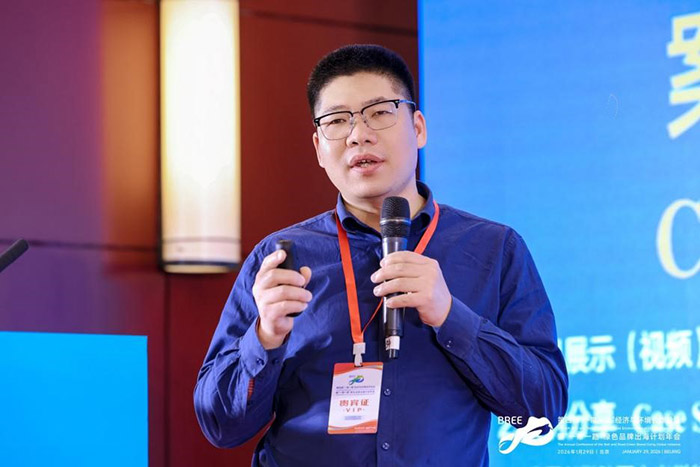
Pang Xiaobing, General Manager of Shaoxing Tengyao Environmental Technology Co., Ltd. and Professor at the College of Environment of Zhejiang University of Technology, presented a UAV-based three-dimensional atmospheric monitoring system. The system integrates multiple miniaturized sensors for real-time, high-altitude monitoring and source tracing of air pollutants, greenhouse gases, and meteorological parameters. The technology has been applied in industrial parks, ship emissions monitoring, and plateau scientific expeditions, supporting the establishment of an integrated air–space–ground monitoring network.

The roundtable dialogue was moderated by Tu Ruihe, Vice Chairman of the All-China Environment Federation and former UNEP Representative to China. Participants included Academician Komiljon Tojibaev from the Institute of Botany of the Academy of Sciences of Uzbekistan; Ismail Tokbergenov, Secretary-General of the Academy of Sciences of Kazakhstan; Saidahmad Zubaydov, Director of the Renewable Energy Research Office of the Center for Science and Digital Technology Innovation of Tajikistan; Ms. Zhang Yajing from the Environmental Development Center of the Ministry of Ecology and Environment; Researcher Feng Yiming from the Institute of Desertification Studies, Chinese Academy of Forestry; and Li Jing, Partner in Charge of Energy Transition and Circular Economy at KPMG China. The panel engaged in in-depth discussions on technological collaboration in transboundary ecological governance, digital empowerment, and sustainable cooperation mechanisms for the Belt and Road region.